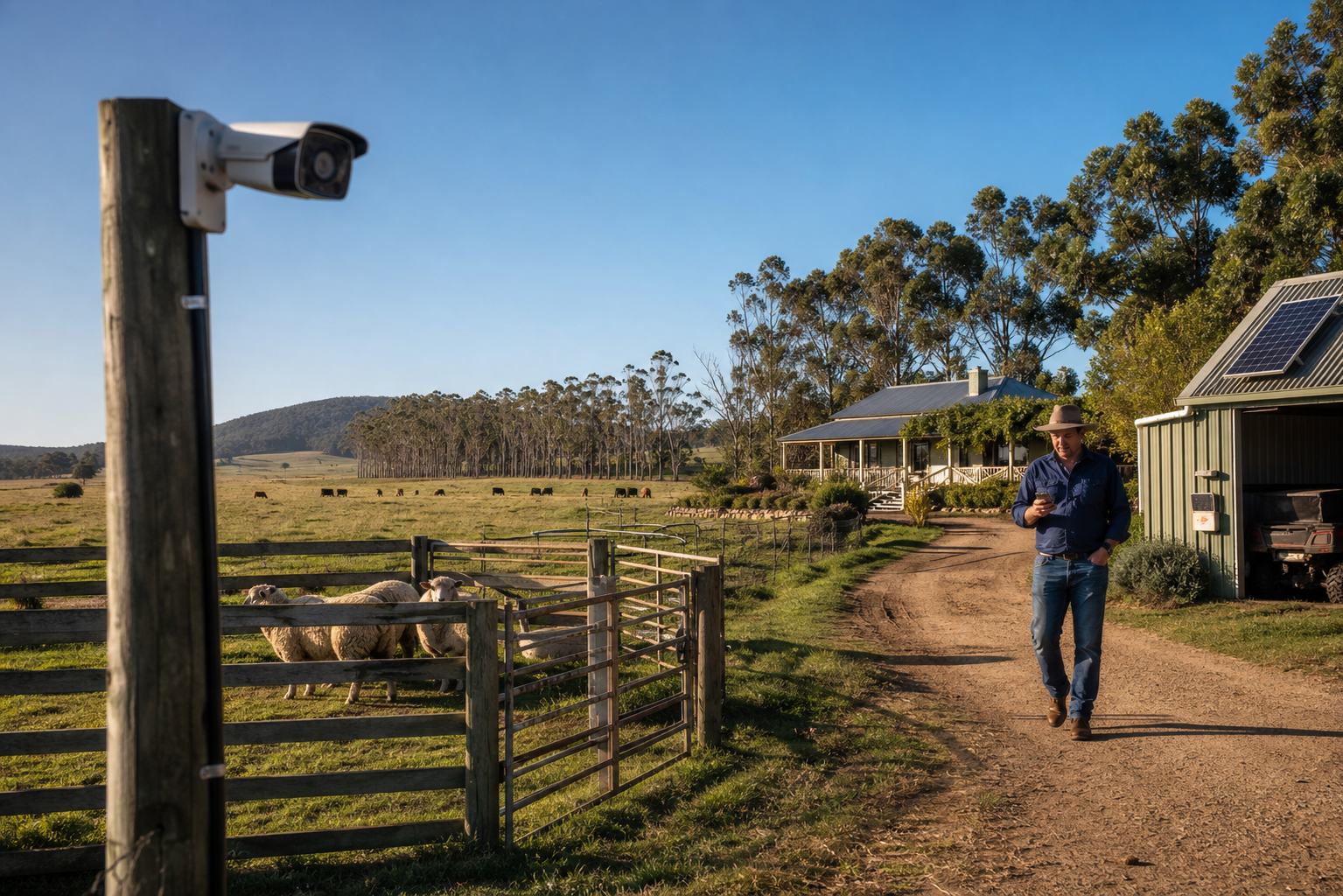
Remote farm properties face unique security challenges that require tailored monitoring solutions to protect livestock, equipment, and infrastructure across vast distances.
Understanding the Unique Security Challenges of Rural Properties
Farm and rural property security in Northern NSW presents challenges that differ significantly from urban and suburban environments. Agricultural properties often span hundreds or thousands of hectares, making comprehensive perimeter security particularly difficult. The sheer size of these properties means that unauthorised access can go undetected for extended periods, leaving valuable assets vulnerable to theft and vandalism.
Livestock theft remains a persistent concern across regional NSW, with thieves targeting cattle, sheep, and horses during night-time hours when properties are least monitored. The remote nature of agricultural land means response times from emergency services can be lengthy, making early detection and rapid notification critical components of effective farm security. Additionally, expensive machinery and equipment—including tractors, harvesters, ATVs, and irrigation systems—represent significant investments that require protection against opportunistic theft.
Connectivity challenges compound these security concerns. Many rural properties sit beyond reliable NBN coverage, making traditional internet-dependent security systems impractical. Inconsistent mobile reception, limited power infrastructure in remote paddocks, and harsh environmental conditions including dust, extreme temperatures, and wildlife all demand security solutions specifically designed for agricultural environments. National security providers typically lack the regional expertise to address these unique requirements, whereas local knowledge of Northern NSW conditions proves essential for implementing truly effective monitoring systems.
Camera Surveillance Systems Designed for Agricultural Environments
CCTV surveillance systems for farm properties must withstand conditions that would compromise standard residential cameras. Agricultural-grade cameras need robust weatherproof housings that protect against dust ingress during harvest seasons, temperature extremes ranging from frost to intense summer heat, and the corrosive effects of agricultural chemicals and fertilisers. High-resolution cameras with infrared night vision capabilities are essential for monitoring livestock yards, machinery sheds, and access points during the critical overnight hours when most rural theft occurs.
Modern agricultural surveillance systems incorporate smart camera features that reduce false alarms whilst maintaining vigilant monitoring. Line crossing detection can alert property owners when vehicles or persons cross defined boundaries, whilst intrusion detection identifies movement in restricted zones such as fuel storage areas or equipment sheds. Object left behind alerts can identify when gates are left open or items are placed suspiciously on the property, and audio detection can capture the sound of machinery starting or vehicles approaching.
Strategic camera placement across expansive rural properties requires careful planning to maximise coverage whilst managing costs. Priority locations typically include main entry gates, livestock loading ramps, machinery storage facilities, fuel tanks, chemical stores, and homestead perimeters. Cameras positioned at elevated vantage points can monitor large paddock areas, whilst licence plate recognition cameras at property entrances create valuable evidence for investigations. Cloud-based surveillance solutions allow farmers to access live footage via smartphone or tablet from anywhere on the property or whilst travelling, providing continuous visibility without requiring onsite servers that are vulnerable to theft or damage.
Alarm Monitoring Solutions That Work Beyond the NBN Footprint
Reliable alarm monitoring for remote agricultural properties cannot depend solely on internet connectivity. Many farms in Northern NSW operate in areas with limited or non-existent NBN coverage, making secure wireless units and alternative communication pathways essential. Modern alarm systems designed for rural environments utilise multiple communication channels including 4G cellular networks, radio frequency transmission, and satellite links to ensure alarm signals reach monitoring centres regardless of internet availability.
A1-rated monitoring centres provide the highest level of professional alarm supervision in Australia, with trained operators, backup power systems, and secure facilities ensuring continuous monitoring even during power outages or natural disasters. When an alarm triggers on a rural property, the monitoring centre can verify the alert through integrated CCTV cameras, distinguishing genuine threats from false alarms caused by wildlife or environmental factors. This visual verification capability proves particularly valuable for remote properties where physical response times may exceed 30 minutes.
Alarm systems for agricultural properties should incorporate sensors tailored to farming environments. High-quality sensors monitoring entry points to machinery sheds, homesteads, and storage facilities detect unauthorised access, whilst pet-friendly sensors reduce false alarms caused by working dogs and farm animals. Integrated smoke detectors provide critical early warning for fires in hay sheds, grain storage, and equipment facilities where fire risk is elevated. Duress and panic systems allow farm workers and family members to summon immediate assistance during medical emergencies or threatening situations, with signals transmitted directly to the monitoring centre for rapid response coordination.
Integrating Access Control with Remote Property Management
Access control systems offer agricultural properties enhanced security beyond traditional lock-and-key methods, particularly for properties employing contractors, seasonal workers, and delivery personnel. Keyless entry systems eliminate the security risks associated with lost keys or unauthorised key copies, whilst providing property owners with detailed records of who accessed which facilities and when. This audit trail proves invaluable for managing staff accountability and investigating security incidents.
Modern access control solutions integrate seamlessly with video surveillance and alarm systems, creating comprehensive security ecosystems. When an access card or code is used to enter a machinery shed, the system can automatically activate cameras to record the entry, whilst restricting access during non-authorised hours triggers immediate alerts. Remote property management capabilities allow farmers to grant temporary access to contractors or delivery drivers without being physically present, then revoke access once work is completed.
For properties with multiple buildings, yards, and storage areas, scalable access control systems can manage different permission levels for various personnel. Permanent staff might access all areas, whilst casual workers receive restricted permissions appropriate to their roles. Integration with smart devices enables property owners to receive instant notifications when specific areas are accessed, monitor access patterns from their smartphone, and remotely lock or unlock gates and facilities as needed. This flexibility proves particularly valuable during busy periods such as harvest when multiple contractors may require coordinated site access.
Ensuring Reliable Power and Connectivity for Continuous Protection
Power supply presents significant challenges for security systems covering expansive rural properties. Remote monitoring locations such as distant gates, outlying paddocks, and boundary fences often lack mains electricity, requiring alternative power solutions. Solar-powered security cameras and sensors with battery backup provide continuous operation even during extended overcast periods, whilst low-power consumption designs extend operational duration between charges. Properly specified solar systems with adequately sized panels and batteries ensure security equipment remains functional throughout winter months when daylight hours are reduced.
Connectivity solutions for remote farm security must overcome the limitations of poor mobile reception and absent internet infrastructure. Mesh network technology allows security devices to communicate with each other across distances, creating relay points that extend coverage beyond single cellular tower range. Directional antennas and signal boosters can enhance weak 4G signals, whilst satellite communication provides backup connectivity for critical security functions when terrestrial networks fail. Hybrid systems combining multiple communication methods ensure alarm signals reach monitoring centres even when primary pathways experience interruptions.
Local security providers with extensive regional experience understand the specific connectivity and power challenges facing Northern NSW agricultural properties. Free security assessments evaluate property-specific conditions including existing infrastructure, mobile coverage patterns, solar exposure, and environmental factors that influence system design. Tailored solutions account for local climate conditions, seasonal variations in power generation, and the unique layout of each farming operation. Ongoing local support ensures systems remain operational as property requirements evolve, with technicians familiar with regional conditions able to rapidly respond to maintenance needs. This localised expertise represents a fundamental advantage that national providers operating from distant capitals cannot replicate, making regional knowledge essential for truly effective farm security in Northern NSW.