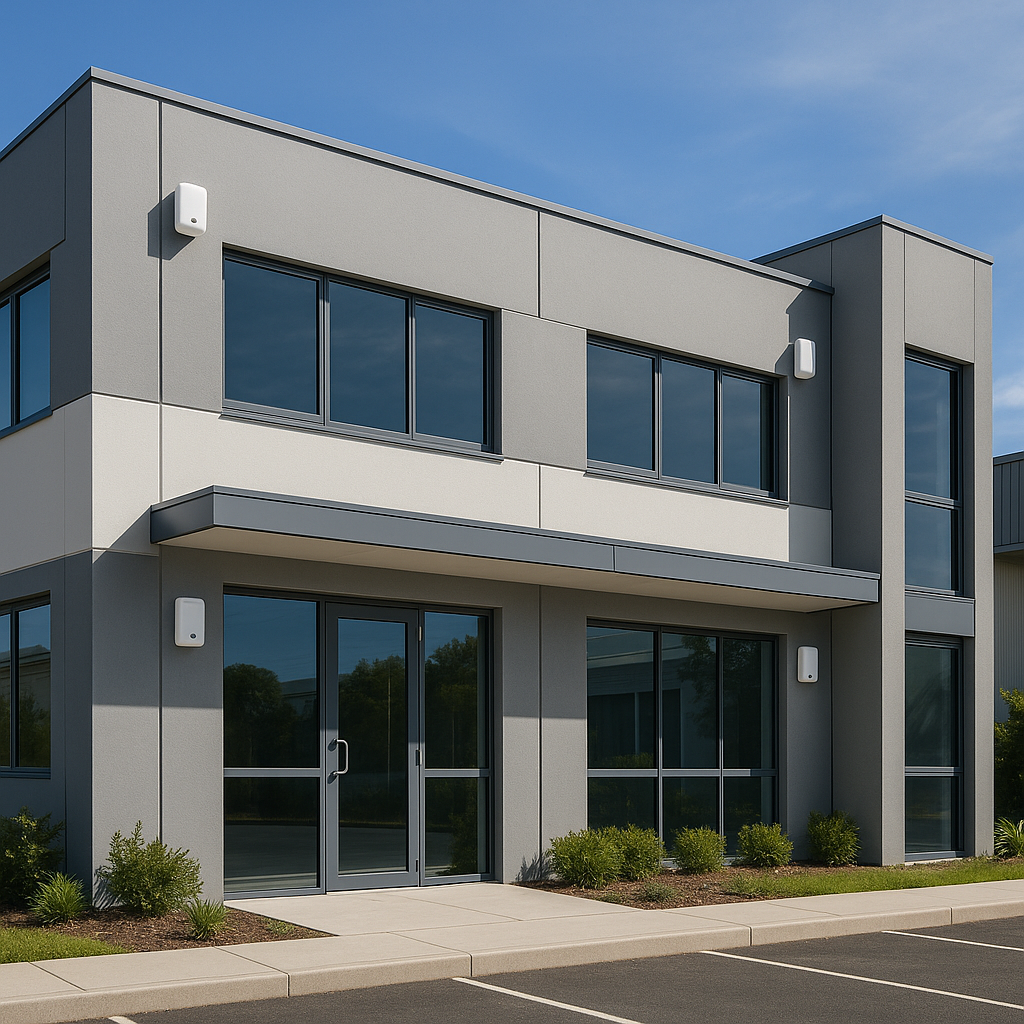
Protecting your Northern NSW business requires more than just locks on the doors—discover the advanced commercial alarm systems that provide 24/7 monitoring, rapid response, and complete peace of mind for your property, assets, and people.
Why Commercial Alarm Systems Are Essential for NSW Businesses
Every business in Northern NSW faces unique security challenges—from retail stores vulnerable to after-hours break-ins to warehouses storing valuable inventory, and offices housing sensitive data. Commercial alarm systems provide the first line of defence against unauthorised access, theft, vandalism, and other security threats that can disrupt operations and impact your bottom line. Without a reliable alarm system, businesses risk significant financial losses, potential liability issues, and damage to their reputation.
Beyond protecting physical assets, commercial alarm systems play a crucial role in workplace safety and regulatory compliance. Many insurance providers require businesses to maintain adequate security measures, and Work Health and Safety (WHS) regulations emphasise the importance of protecting employees and visitors. Modern alarm systems integrate smoke detectors, duress buttons, and emergency response capabilities that help businesses meet these obligations whilst providing staff with confidence that their safety is prioritised.
The regional conditions across Northern NSW present specific considerations for business security. Properties in Tamworth, Gunnedah, Newcastle and surrounding areas often operate in environments where emergency response times may be longer than in metropolitan centres. A professionally monitored alarm system bridges this gap, ensuring that security events trigger immediate notification to trained operators who can verify threats and coordinate appropriate responses. This local monitoring capability, combined with rapid response protocols, provides businesses with the protection they need to operate confidently.
Key Features to Look for in a Commercial Alarm System
When evaluating commercial alarm systems, prioritise high-quality sensors that detect unauthorised access at all entry points. Door and window sensors should be complemented by motion detectors strategically placed throughout your premises. For businesses concerned about false alarms—particularly those with after-hours cleaning staff or environments where small animals may be present—pet-friendly sensors can significantly reduce nuisance activations whilst maintaining security integrity.
Professional monitoring is a non-negotiable feature for comprehensive business security. Look for systems connected to an A1-rated monitoring centre that operates 24/7 with backup power, secure access protocols, and trained operators. The monitoring centre should be capable of visually verifying alarms through integrated CCTV, distinguishing genuine security events from false triggers. This verification capability prevents unnecessary disruptions whilst ensuring legitimate threats receive immediate attention from security patrols or emergency services.
Modern commercial alarm systems should offer remote access and control through smartphone applications, allowing business owners and authorised personnel to arm and disarm systems, receive real-time alerts, and monitor system status from anywhere. Integration capabilities are equally important—your alarm system should work seamlessly with CCTV surveillance, access control, and intercom systems to create a unified security solution. Cloud-based platforms provide scalability and flexibility, enabling businesses to adapt their security as operational needs evolve without requiring extensive hardware upgrades.
NBN compatibility is essential for businesses across Northern NSW, as traditional landline connections become increasingly obsolete. Secure wireless backup units ensure your alarm system remains operational even during internet or power outages—a critical consideration for regional properties that may experience weather-related disruptions. Systems should also incorporate integrated smoke detectors and environmental sensors that monitor for fire, water leaks, and other hazards that pose risks beyond security threats.
Types of Commercial Alarm Systems Available in NSW
Small office and retail security packages typically focus on perimeter protection and intrusion detection. These systems monitor entry points with door and window sensors, incorporate motion detectors in key areas, and include keypads or card readers for authorised access. For retail environments, silent panic buttons provide staff with discreet duress activation, whilst glass-break sensors detect forced entry attempts. These packages often integrate with point-of-sale systems and can be configured to automatically arm during closing procedures, reducing the risk of human error.
Warehouse and industrial security solutions require more comprehensive coverage across larger areas with multiple access points. These systems combine perimeter security with zone-based monitoring that allows different areas to be armed independently—enabling night shifts to work in one section whilst other zones remain fully secured. Advanced features such as line crossing detection and intrusion zones use smart technology to identify suspicious movement patterns. Thermal cameras can monitor temperature-sensitive inventory and detect fire risks before they escalate, whilst license plate recognition capabilities track vehicle movements in loading areas.
Healthcare and education facilities require specialised alarm configurations that balance security with the unique operational demands of these environments. Medical facilities benefit from integrated medical alarms and duress systems that enable staff to call for assistance during emergencies. Access control integration ensures that sensitive areas remain restricted to authorised personnel whilst maintaining compliance with privacy regulations. Educational institutions often implement scheduled arming profiles that adapt to varying activity patterns throughout the day, with automatic notifications when entry occurs outside expected timeframes.
Hospitality and multi-tenanted commercial properties present distinct challenges that hybrid alarm solutions address effectively. These systems can digitise existing analogue infrastructure, preserving previous investments whilst adding cloud-based management capabilities. Individual zones can be monitored and controlled independently, allowing different tenants or departments to manage their own security parameters. Scalable architectures accommodate business growth, with the ability to add sensors, cameras, and access points as needed without requiring complete system replacement.
How Professional Monitoring Enhances Business Security
Professional monitoring transforms alarm systems from simple alert devices into comprehensive security solutions backed by trained operators and coordinated response protocols. When an alarm activates, signals are immediately transmitted to a monitoring centre where security professionals assess the situation using multiple information sources. Visual verification through integrated CCTV enables operators to confirm whether an activation represents a genuine security threat or a false alarm, significantly reducing unnecessary callouts whilst ensuring legitimate incidents receive appropriate attention.
The advantage of local monitoring becomes particularly evident in regional NSW contexts. A Tamworth-based partner monitoring centre understands the unique characteristics of businesses across Northern NSW, from the layout of commercial districts to typical operating hours and seasonal variations in activity. This local knowledge enables monitoring staff to recognise unusual patterns and make informed decisions about threat levels. When security patrols or emergency services need to be dispatched, local operators can provide accurate property information and direct responders to the correct locations without delays caused by unfamiliarity with the area.
Monitoring centres with A1 certification meet the highest standards in Australia for reliability, security, and operational protocols. These facilities maintain dual power backup systems ensuring continuous operation during outages, implement strict access controls to protect client information, and employ operators who receive ongoing training in emergency response procedures. Regular system testing and maintenance protocols verify that communication links between your business and the monitoring centre remain operational, providing confidence that security events will always be detected and acted upon.
Professional monitoring also addresses the practical reality that business owners and managers cannot remain constantly vigilant. After-hours protection is comprehensive, with monitoring staff immediately responding to activations when your premises are unoccupied. During business hours, duress alarms and panic buttons provide staff with direct communication to trained operators who can coordinate assistance whilst you focus on managing the immediate situation. This around-the-clock supervision delivers genuine peace of mind, knowing that your business security is never unattended.
Choosing the Right Commercial Alarm System for Your Business
Begin the selection process by conducting a comprehensive security assessment of your business premises. Identify all potential entry points including doors, windows, loading docks, and roof access. Consider the layout of your facility—open-plan offices require different sensor placement than warehouses with storage racks and machinery. Document your operational patterns: which areas require 24/7 security versus those that can be zoned for independent arming? Understanding these factors enables you to specify a system that matches your actual security needs rather than paying for unnecessary features or leaving vulnerabilities unaddressed.
Budget considerations should extend beyond initial installation costs to encompass ongoing monitoring fees, maintenance requirements, and potential future expansion. Cloud-based security solutions with software-as-a-service pricing models offer cost-effective approaches that scale with your business, allowing you to pay only for the services you use. Interest-free finance options can make comprehensive security systems accessible whilst managing cash flow. Compare the total cost of ownership across different system architectures, considering factors such as equipment lifespan, upgrade pathways, and whether solutions require onsite servers that add complexity and maintenance burdens.
Professional installation delivers significant advantages over self-installed alternatives. Experienced security professionals understand optimal sensor placement to maximise detection whilst minimising false alarms, ensure proper integration between alarm components and other security systems, and configure settings that align with your operational requirements. Licensed technicians navigate compliance considerations including privacy regulations governing surveillance and alarm systems. Installation should be quick, minimally disruptive, and include comprehensive testing to verify all components function correctly. Look for providers offering warranties on products and workmanship, demonstrating confidence in the quality of their installations.
Partner with security providers who offer free, no-obligation consultations and demonstrate genuine understanding of your business context. The right provider takes time to understand your specific concerns, explains technical aspects in accessible language, and recommends solutions tailored to your requirements rather than pushing standardised packages. Local providers with established presence in Northern NSW bring valuable regional knowledge and can offer ongoing support that extends beyond installation. Verify that providers maintain appropriate licensing, work with trusted security brands, and operate or partner with certified monitoring centres. A relationship with a provider committed to your long-term security needs ensures you have expert advice available as your business evolves and security technologies advance.